
When travelers think of Agra, the Taj Mahal is usually the first place that comes to mind. But beyond this world-famous monument lies a historic city filled with old streets, traditional markets, Mughal-era architecture, local crafts and fascinating stories.
A Heritage Walk in Agra is a wonderful way to discover this lesser-known side of the city.
Instead of seeing Agra only from a car, a walking tour allows you to experience the city at street level. You can explore the old city, visit traditional markets, see local craftsmanship and learn how Agra’s history continues to influence everyday life.
Why Take a Heritage Walk in Agra?
A heritage walk offers a different experience from a traditional sightseeing tour.
The major monuments tell you about Agra’s royal and architectural history, while the old streets show you how the city developed around them.
Walking through historic neighborhoods, you can see traditional houses, small shops, religious buildings, local markets and craftsmen continuing traditions passed down through generations.
It is also an excellent experience for travelers who have already visited the Taj Mahal and want to understand more about Agra.
Explore the Historic Streets of Old Agra
The old city of Agra is full of character.
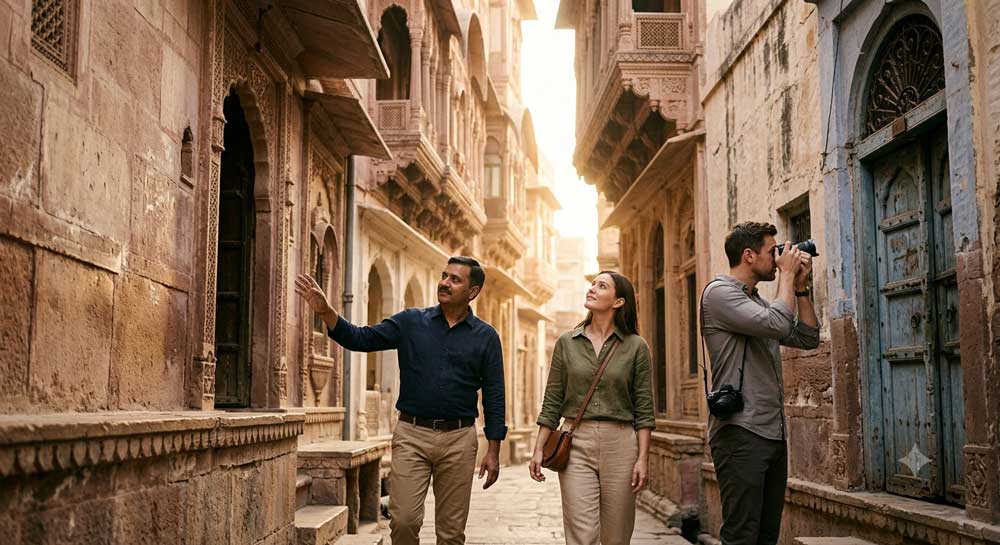
Narrow streets lead between colorful shops, traditional buildings and busy markets. As you walk, look for old doors, balconies, decorative façades and architectural details that might otherwise be missed.
Some buildings have changed over the years, while others still retain elements of traditional architecture.
A local guide can explain the history behind these streets and help you understand how Agra developed as an important city during the Mughal period.
This is one of the main advantages of an Agra walking tour: you can slow down and notice details rather than simply passing them from a vehicle.
Discover Kinari Bazaar
Kinari Bazaar is one of the most interesting markets to experience during a heritage walk in Agra.
Located in the historic center, the market is known for its colorful shops selling fabrics, decorations, jewelry, handicrafts and many other goods.
The narrow lanes can be busy, creating a lively atmosphere that gives visitors a glimpse of everyday life in Agra.
Rather than simply shopping, take time to observe the market itself. Watch shopkeepers arrange their goods, see local residents going about their daily activities and discover traditional products.
A private guide can help you navigate the crowded streets and explain the history and importance of the area.
Jama Masjid and Agra’s Mughal Heritage
Jama Masjid is another important landmark in Agra’s historic center.
Located close to Agra Fort and the old markets, the mosque is an excellent example of Mughal architectural traditions.
Its red sandstone structure and large courtyard provide an important connection to the city’s history.
The surrounding streets are equally interesting because they demonstrate how religious buildings, markets and residential areas developed together.
When visiting religious places, visitors should dress respectfully and follow local rules regarding photography and access.
Agra Fort and Its Historic Surroundings
Agra Fort is one of the city’s most important historical attractions.
The impressive red sandstone complex was developed extensively under Emperor Akbar and later became an important residence of Mughal rulers.
Inside the fort, visitors can see palaces, courtyards, halls and defensive structures connected with the Mughal Empire.
However, the history of Agra Fort does not exist separately from the city around it.
Markets and neighborhoods developed around important royal and commercial centers. Exploring these areas on foot helps put the monument into a wider historical context.
For this reason, combining an Agra Fort visit with a heritage walk can provide a deeper understanding of the city.
Discover Agra’s Traditional Crafts
Agra is particularly famous for its marble inlay craftsmanship.
The Taj Mahal contains beautiful examples of this decorative technique, traditionally known as pietra dura. Small pieces of colored stone are carefully cut and set into marble to create intricate floral and geometric designs.
The tradition continues among artisans in Agra today.
During a cultural experience, visitors can learn about the techniques and skill involved in this craft.
If you are interested in buying handicrafts, understanding how they are made can make the experience much more meaningful than simply purchasing a souvenir.
Taste Local Food
Food is another way to experience Agra’s culture.
One of the city’s most famous specialties is petha, a traditional sweet made from ash gourd.
While exploring the old markets, you may also encounter local snacks, sweets and North Indian dishes.
If you want to try street food, it is sensible to choose established and hygienic vendors. Travelers with allergies or dietary restrictions should inform their guide before the tour.
A local guide can also recommend places to experience traditional food according to your preferences.
Best Time for an Agra Heritage Walk
The cooler months from October to March are generally the most comfortable time for walking around Agra.
Early morning is particularly pleasant because temperatures are usually cooler and some areas are less crowded.
Late afternoon can also be a good option, especially during the winter months.
During the hotter part of the year, it is better to avoid walking during the middle of the day. An early-morning or late-afternoon tour is usually more comfortable.
Always consider the weather on the day of your visit.
How Long Does an Agra Heritage Walk Take?
A typical private heritage walk takes around 2 to 3 hours.
The exact duration depends on the route and your interests.
A shorter experience can focus on the old city and traditional markets, while a longer walking tour can include additional heritage sites, architecture, crafts and food experiences.
A private tour also allows you to choose your own pace.
You can spend more time taking photographs, asking questions or exploring a particular market without having to follow a large group.
What to Bring on Your Heritage Walk
Because you will be walking through busy streets, comfort is important.
We recommend bringing:
- Comfortable walking shoes
- Drinking water
- Sunglasses and sun protection
- A camera or smartphone
- A small bag
- Some cash for small purchases
Modest clothing is recommended when visiting religious sites.
Always ask permission before photographing local people or private spaces.
Heritage Walk + Taj Mahal: The Complete Agra Experience
If you are visiting Agra for the first time, combining the city’s major monuments with a heritage walk is an excellent way to experience the destination.
Visit the Taj Mahal to admire one of the world’s greatest architectural masterpieces.
Explore Agra Fort to learn about the Mughal emperors and their royal city.
Then take a heritage walk through Old Agra to discover the markets, architecture, crafts and local life that continue beyond the monuments.
This combination gives you three different perspectives of Agra:
Monuments → History → Local Life
That is what makes a heritage walk so valuable.
Book a Private Heritage Walk in Agra
A heritage walk is ideal for travelers who want to experience Agra beyond the usual tourist attractions.
With a knowledgeable local guide, you can discover historic streets, understand Mughal heritage, explore traditional markets and learn about local crafts and food.
At Visit India With Guide, we provide private travel experiences designed to help visitors discover India’s history and culture with local knowledge.
Whether you are traveling as a couple, family or small group, your walking experience can be adapted to your interests and available time.
Frequently Asked Questions
Is a heritage walk in Agra worth it?
Yes. It is an excellent way to experience Agra beyond the Taj Mahal and discover the city’s historic streets, markets, architecture and local culture.
How long is an Agra heritage walk?
Most private heritage walks take approximately 2–3 hours, depending on the route and walking pace.
What can I see during a heritage walk in Agra?
Depending on the route, you can explore Old Agra, traditional markets, Jama Masjid, areas around Agra Fort, historic architecture, local crafts and food.
What is the best time for an Agra walking tour?
October to March generally provides the most comfortable weather. Early morning and late afternoon are good choices for walking.
Can I combine a heritage walk with the Taj Mahal?
Yes. A heritage walk can be combined with the Taj Mahal and Agra Fort to create a complete Agra sightseeing experience.
Discover the Living Heritage of Agra
The Taj Mahal may bring you to Agra, but the city’s historic streets reveal another side of its story.
From the busy lanes of Kinari Bazaar to traditional architecture, Mughal heritage, local crafts and food, a Heritage Walk in Agra gives you the opportunity to experience the city at a slower and more personal pace.
Walk Through Agra’s History
Go beyond the Taj Mahal and discover Agra’s historic streets, traditional markets, local crafts and fascinating stories with a knowledgeable local guide.
Book your private Heritage Walk in Agra with Visit India With Guide and experience the city from a local perspective.
Visit India With Guide:
https://visitindiawithguide.com/
For more information about our experienced local guides and Taj Mahal experiences, visit Taj Mahal Tour Guide Family Group: