
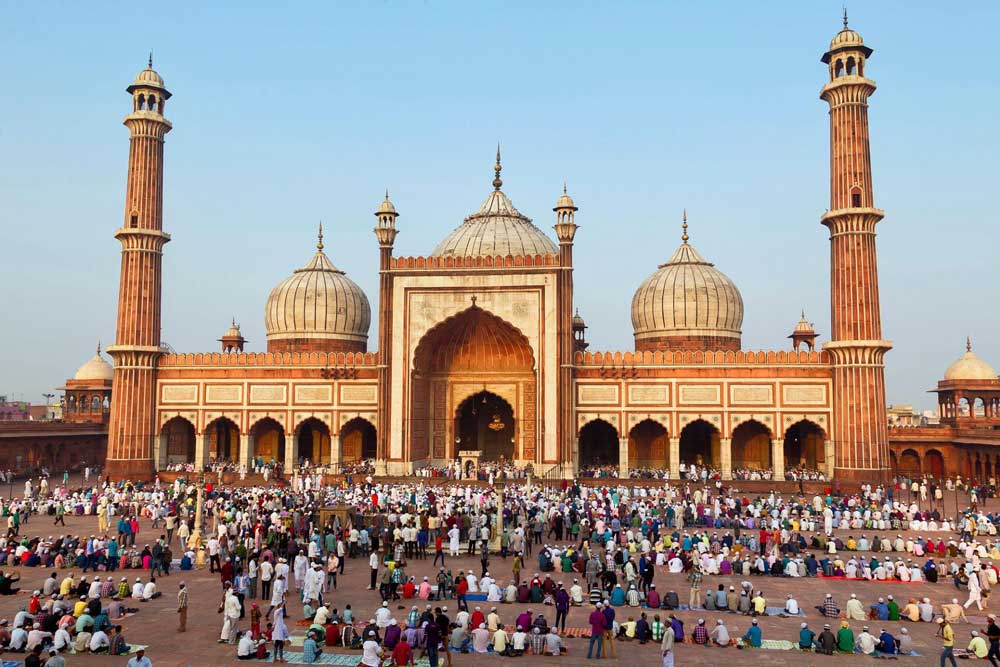
The first thing you’ll notice when approaching Jama Masjid is its sheer scale.
As you climb the broad stone steps leading to the mosque, the noise of Old Delhi begins to fade. In front of you rises a masterpiece of Mughal architecture—three marble domes, towering minarets, and a vast courtyard capable of holding thousands of worshippers.
For centuries, Jama Masjid has been one of the most important religious and cultural landmarks in India. Today, it continues to welcome travelers from across the world who come to admire its beauty and experience the vibrant atmosphere of Old Delhi.
A Vision of Emperor Shah Jahan
If the architecture looks familiar, there is a reason.
Jama Masjid was built by Emperor Shah Jahan, the same ruler who gifted the world the Taj Mahal and the Red Fort.
Construction began in 1650 and took approximately six years to complete. Thousands of craftsmen worked on the mosque, creating what would become the largest mosque in India at the time.
More than 350 years later, Jama Masjid remains one of Shah Jahan’s most impressive achievements.
More Than Just a Monument
Unlike many historical sites that function only as tourist attractions, Jama Masjid remains a living place of worship.
Throughout the day, visitors can witness:
- Daily prayers
- Religious gatherings
- Traditional Islamic customs
- Local community life
This gives the mosque a unique atmosphere that combines history, culture, and spirituality.
The View That Most Tourists Miss
One of the hidden highlights of Jama Masjid is the southern minaret.
For a small fee, visitors can climb the narrow spiral staircase to the top.
The reward?
A breathtaking view over:
- Old Delhi’s rooftops
- The bustling lanes of Chandni Chowk
- The majestic Red Fort
- The ever-changing skyline of Delhi
Many photographers consider this one of the best viewpoints in the city.
Architectural Details Worth Noticing
While the mosque appears grand from a distance, its true beauty lies in the details.
Take a closer look and you’ll discover:
- Delicate marble work
- Elegant calligraphy
- Red sandstone patterns
- Beautiful arches
- Symmetrical Mughal design
Every corner reflects the artistic excellence of the Mughal era.
Best Time to Experience Jama Masjid
Early mornings offer a peaceful atmosphere and fewer crowds.
However, many travelers prefer visiting in the late afternoon when sunlight creates beautiful shadows across the courtyard and the city begins to glow before sunset.
The winter season from October to March provides the most comfortable weather for exploration.
What to Know Before Visiting
Timings
- Open daily
- Generally accessible from morning until sunset
- Prayer times may temporarily restrict visitor access
Dress Code
As Jama Masjid is an active mosque:
- Wear modest clothing
- Cover shoulders and knees
- Remove shoes before entering
- Respect religious practices
Photography
Photography is permitted in most areas, though additional charges may apply for professional equipment.
Exploring Old Delhi After Jama Masjid
One of the biggest advantages of visiting Jama Masjid is its location.
Within walking distance, you’ll find:
- Chandni Chowk
- Red Fort
- Raj Ghat
Together, these attractions create one of the most fascinating cultural experiences in India.
Final Thoughts
Many travelers visit Delhi searching for grand monuments and famous landmarks. While the city certainly has plenty of those, Jama Masjid offers something more.
It is a place where history is still alive.
The sound of prayer, the intricate architecture, the views over Old Delhi, and the energy of the surrounding streets all combine to create an experience that feels authentic and unforgettable.
If you’re planning a trip to Delhi, make sure Jama Masjid is more than just a quick photo stop—it deserves time to be truly experienced.
Whether you’re exploring Delhi, Agra, Jaipur, or the complete Golden Triangle circuit, having a knowledgeable local guide can make your journey more meaningful and memorable.
For Delhi and India tours:
Visit India With Guide
For Taj Mahal tours, Agra sightseeing, and local guide services:
Taj Mahal Tour Guide Family Group