
The Taj Mahal is one of the most recognizable landmarks in the world and the most visited monument in India. Located in Agra, this magnificent white marble mausoleum attracts millions of travelers every year with its breathtaking architecture, fascinating history, and romantic legacy.
Built by Mughal Emperor Shah Jahan in memory of his beloved wife Mumtaz Mahal, the Taj Mahal is more than just a monument—it is a masterpiece of art, engineering, and devotion.
Why Is the Taj Mahal Famous?
The Taj Mahal is famous for its stunning beauty, perfect symmetry, and remarkable craftsmanship. It is widely regarded as the finest example of Mughal architecture and is often called the ultimate symbol of love.
In 1983, the Taj Mahal was designated a UNESCO World Heritage Site, recognizing its outstanding cultural and historical significance.
History of the Taj Mahal
The story of the Taj Mahal begins in 1631 when Mumtaz Mahal, the favorite wife of Emperor Shah Jahan, passed away during childbirth. Heartbroken by her death, Shah Jahan commissioned a grand mausoleum that would immortalize her memory.
Construction of the Taj Mahal started in 1632 and took approximately 22 years to complete. Thousands of artisans, architects, and craftsmen worked on the project, creating one of the most extraordinary monuments ever built.
Today, the Taj Mahal remains a testament to the artistic achievements of the Mughal Empire and continues to inspire visitors from around the world.
Architecture of the Taj Mahal
The architecture of the Taj Mahal combines Persian, Islamic, and Indian influences, resulting in a design that is both elegant and harmonious.
Key Architectural Features
White Marble Exterior
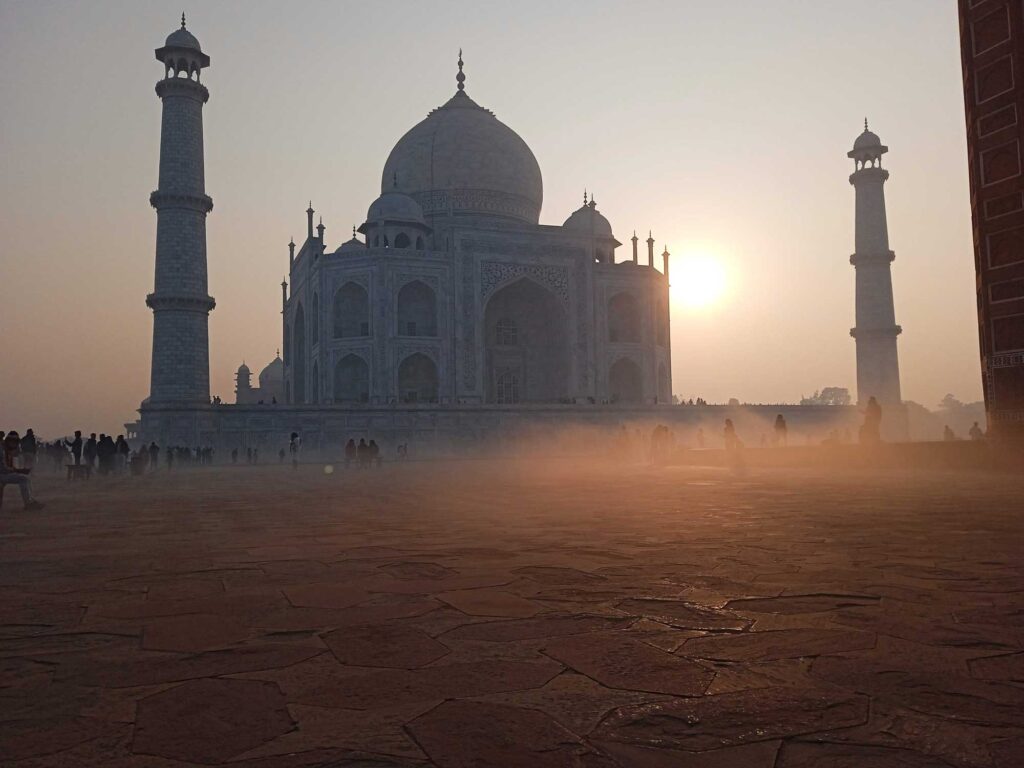
The monument is constructed from high-quality white marble that reflects different shades throughout the day. At sunrise, it appears soft pink; during the day, it shines bright white; and at sunset, it takes on a golden glow.
Four Majestic Minarets
Four slender minarets surround the main mausoleum. These towers were carefully designed to enhance the monument’s symmetry and grandeur.
Intricate Marble Inlay Work
One of the most impressive features of the Taj Mahal is its delicate marble inlay work. Skilled craftsmen used precious and semi-precious stones to create beautiful floral patterns throughout the monument.
Beautiful Charbagh Garden
The Taj Mahal complex includes a Persian-style garden divided into four sections, symbolizing paradise in Islamic tradition.
Best Time to Visit the Taj Mahal
Choosing the right time to visit can greatly enhance your experience.
Sunrise Visit
A sunrise visit offers cooler temperatures, fewer crowds, and stunning photography opportunities. Many travelers consider sunrise the best time to see the Taj Mahal.
Sunset Visit
The monument looks equally beautiful at sunset when the warm evening light creates magical reflections on the marble surface.
Best Season
The ideal months to visit the Taj Mahal are from October to March when the weather is pleasant and suitable for sightseeing.
Taj Mahal Visitor Information
Opening Hours
The Taj Mahal is open from sunrise to sunset every day except Friday.
Entry Tickets
Visitors can purchase tickets online or at the ticket counters near the monument. Booking online often saves time and helps avoid queues.
Security Guidelines
To maintain the monument’s preservation, certain items are restricted inside the complex. It is recommended to travel light and follow all security instructions.
Interesting Facts About the Taj Mahal
- The Taj Mahal took over two decades to complete.
- More than 20,000 workers contributed to its construction.
- It is one of the New Seven Wonders of the World.
- The monument attracts millions of visitors annually.
- The Taj Mahal changes color depending on the time of day and weather conditions.
- The complex covers approximately 42 acres.
Tips for Visiting the Taj Mahal
To make the most of your visit:
- Arrive early in the morning.
- Book tickets in advance.
- Wear comfortable walking shoes.
- Carry a valid identification document.
- Bring a camera for memorable photographs.
- Consider hiring an experienced local guide.
Why Hire a Local Taj Mahal Guide?
A knowledgeable guide can transform your visit by explaining the history, architecture, symbolism, and hidden details that many travelers overlook. Guided tours also help visitors navigate the monument efficiently while gaining a deeper appreciation of its cultural significance.
Final Thoughts on the Taj Mahal
The Taj Mahal is not just a monument—it is a masterpiece that represents love, beauty, and the rich heritage of India. Whether you are a history enthusiast, architecture lover, or first-time traveler, visiting the Taj Mahal is an experience that belongs on every travel bucket list.
Its timeless elegance continues to captivate visitors centuries after its construction, making it one of the world’s most treasured landmarks.
Plan Your Taj Mahal Experience
Ready to explore the Taj Mahal with expert local guidance?
Visit Taj Mahal Tour Guide Family Group to discover guided tours, travel tips, and personalized experiences that will make your visit truly unforgettable.