

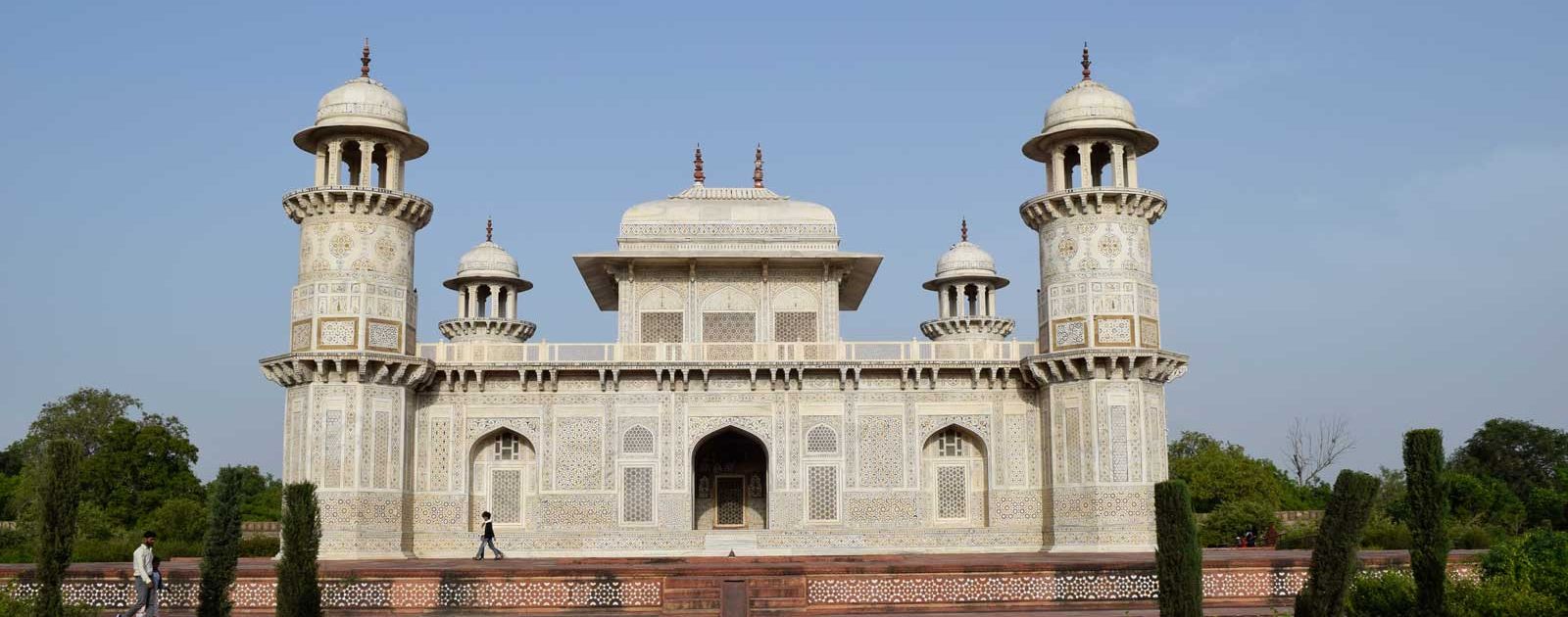
Tomb of Itimad-ud-Daulah – Jewel Box
Introduction
The Tomb of Itimad-ud-Daulah, often called the “Baby Taj” or “Little Taj,” is one of Agra’s most exquisite Mughal mausoleums. Located on the banks of the Yamuna River, this jewel-box-like tomb was built between 1622 and 1628 by Empress Nur Jahan for her parents, Mirza Ghiyas Beg and Asmat Begum. Often seen as a draft of the Taj Mahal, the tomb is celebrated for its intricate marble inlay work and elegant architecture, standing as a masterpiece in its own right.
History
Mirza Ghiyas Beg, originally a Persian merchant, rose to prominence in the Mughal court under Emperor Jahangir. After being titled Itimad-ud-Daulah (Pillar of the State), he became a trusted minister. His daughter, Nur Jahan, married Emperor Jahangir, and on her father’s death in 1622, she commissioned this mausoleum in his memory.
The tomb reflects a tale of ambition, love, and artistry. From a humble beginning in Persia to the highest ranks of the Mughal Empire, Mirza Ghiyas Beg’s story is intricately linked with the grandeur of the Mughal era. Unlike many monuments, this tomb celebrates both personal legacy and architectural innovation.
Architecture
The Tomb of Itimad-ud-Daulah is a platform tomb, a style popular during Jahangir’s reign, and is considered the first Mughal tomb entirely made of white marble. It introduces several innovations later perfected in the Taj Mahal.
Exterior Features
- Four Corner Turrets (Chattris): Octagonal bases topped with small domed kiosks.
- Geometric and Floral Inlays: Hard and semi-precious stones form elaborate motifs of fruits, flowers, and vessels (chine khana).
- Jalis (Lattice Screens): Carved screens allow natural light while maintaining privacy, showcasing Gujarati design influence.
- False Cenotaphs and Canopied Dome: The upper floor houses symbolic cenotaphs while the real graves lie below.
Interior Features
- Nine Chambers: The central chamber contains the tombs of Mirza Ghiyas Beg and Asmat Begum.
- Delicate Marble Carving: Every surface features floral, geometric, and animate motifs, some restored to maintain original beauty.
- Calligraphy: Epigraphic panels crafted by Abd al-Nabi al-Qarshi decorate the walls.
- The tomb combines Persian and Indian architectural styles, reflecting the Indo-Islamic fusion that became a hallmark of Mughal monuments.
Gardens
The tomb is set within a small charbagh (four-part garden) atop a red sandstone platform. Water channels, pathways, and landscaped flowerbeds enhance the symmetry and tranquility, serving as inspiration for the later Taj Mahal gardens. The garden’s riverside location provides stunning views of the Yamuna River, perfect for sunrise and sunset photography.
Visiting the Tomb
Location: Eastern bank of Yamuna River, Agra
Entry Fee: ?50 (Indian citizens), ?650 (foreign visitors)
Best Time to Visit: October to March (pleasant weather)
Tips:
Hire a local guide to explore hidden architectural details.
Visit early morning or late afternoon for best light and fewer crowds.
Combine with stops at Taj Mahal, Agra Fort, and Mehtab Bagh.
Why Choose a Local Guide
A guide can bring history to life, explaining not just who built it, but why it was built, the innovations used, and its influence on Mughal architecture. Tours also include:
Insights into Mughal history and art
Perfect photography spots
Conclusion
The Tomb of Itimad-ud-Daulah is not just a “Baby Taj” but a precursor to the Taj Mahal, blending innovation, elegance, and deep personal stories. Visiting it offers a glimpse into Mughal artistry, Persian influence, and the extraordinary legacy of Nur Jahan and her family.


