

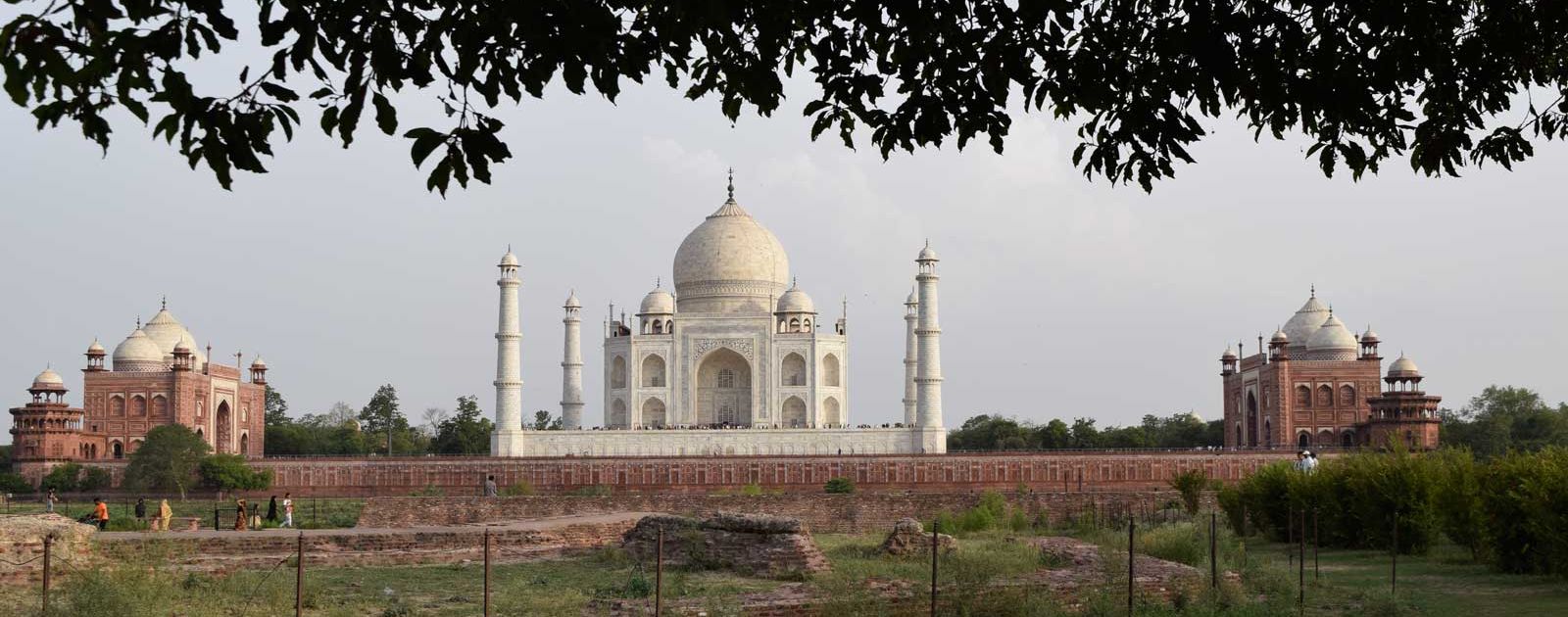
Mehtab Bagh – History, Architecture & Best View of the Taj Mahal
Introduction
Mehtab Bagh, meaning “Moonlight Garden,” is a stunning Mughal garden located on the northern bank of the Yamuna River, directly opposite the Taj Mahal. Known for its perfectly symmetrical layout and serene ambiance, this charbagh garden provides one of the most iconic views of the Taj Mahal, especially at sunrise and sunset. A visit to Mehtab Bagh offers a blend of history, architecture, and nature, making it a must-see spot for anyone exploring Agra.
History of Mehtab Bagh
Mehtab Bagh was the last of eleven Mughal gardens built along the Yamuna River. While some sources suggest that Emperor Babur initiated the first garden, it was Shah Jahan who identified the crescent-shaped floodplain across the river as an ideal location for a moonlit pleasure garden. Designed as an integral part of the Taj Mahal complex, it mirrored the monument’s width and created a scenic reflection of the white marble mausoleum in its water tanks and fountains.
Legends speak of Shah Jahan’s desire to construct a Black Taj Mahal as a twin to the original, though this dream remained unfulfilled after his imprisonment by Aurangzeb. The garden changed hands over the centuries, suffering from floods and neglect until restoration efforts began in the 1990s.
Architecture & Design
Mehtab Bagh follows the classic charbagh layout, which divides the garden into four equal compartments using raised pathways and water channels. Originally, it included reflecting pools, fountains, shaded pavilions, fragrant flowers, fruit trees, and native shrubbery.
Key features of Mehtab Bagh include:
- Octagonal Pond – Located on the southern side, perfectly reflecting the Taj Mahal.
- Central Tank – Enhances the symmetry and adds depth to the garden design.
- Baradaris – Open pavilions for enjoying moonlit nights, located on the east and west.
- Octagonal Towers – Only one of the original red sandstone towers remains today.
- Brick Pathways – Wide enough to navigate along the original garden’s edges.
The garden’s layout emphasizes symmetry, balance, and a visual connection with the Taj Mahal across the river.
Restoration
The Archaeological Survey of India (ASI) led restoration efforts in the 1990s, guided by historical documentation, archaeological excavations, and paleobotanical studies. The original Mughal horticulture was carefully recreated using 81 plants historically planted in Mughal gardens, including hibiscus, neem, guava, citrus, maulshri, ashoka, and jamun.
Restoration included clearing debris, rebuilding pathways, and replicating water channels and fountains. Today, Mehtab Bagh showcases the grandeur of Mughal garden design, offering tourists a tranquil escape from the busy streets of Agra.
Archaeology
Excavations unearthed the original layout of the garden, including the octagonal pond, fountains, and garden pavilions. Letters from Aurangzeb confirm the condition of Mehtab Bagh after 17th-century floods. Archaeological studies have set new standards for Mughal garden research, making it a fascinating destination for history enthusiasts.
Best Time to Visit
- Sunrise – Perfect for capturing the first light reflecting on the Taj Mahal.
- Sunset – Ideal for serene photography and relaxing in the garden.
- October to March – Cool winter months are the most pleasant.
Visitors can reach Mehtab Bagh by car, taxi, or tuk-tuk. The garden is quieter than major monuments, allowing a peaceful experience amidst manicured paths, flowering plants, and occasional wildlife.
Why Visit Mehtab Bagh
- Best Views of the Taj Mahal – Especially for photography enthusiasts.
- Tranquil Escape – Peaceful gardens away from the crowds.
- Historical Significance – Integral part of the Mughal-era riverfront terraces.
- Perfect for Couples & Nature Lovers – Enjoy a romantic and serene environment.
Tips for Tourists
- Wear comfortable shoes for walking on garden paths.
- Carry water and light snacks, as food options inside are limited.
- Hire a local guide to learn historical anecdotes and hidden details.
- Combine your visit with Taj Mahal, Agra Fort, or Itmad-ud-Daulah tours for a complete Agra experience.
Conclusion
Mehtab Bagh is not just a garden—it is a living testimony to Mughal architecture, horticulture, and aesthetics. With its serene pathways, reflecting pools, and unobstructed views of the Taj Mahal, it is an ideal destination for history buffs, photographers, and travelers seeking tranquility in Agra. A visit to Mehtab Bagh ensures a deeper understanding of the Mughal legacy while capturing one of the most breathtaking views in India.


