

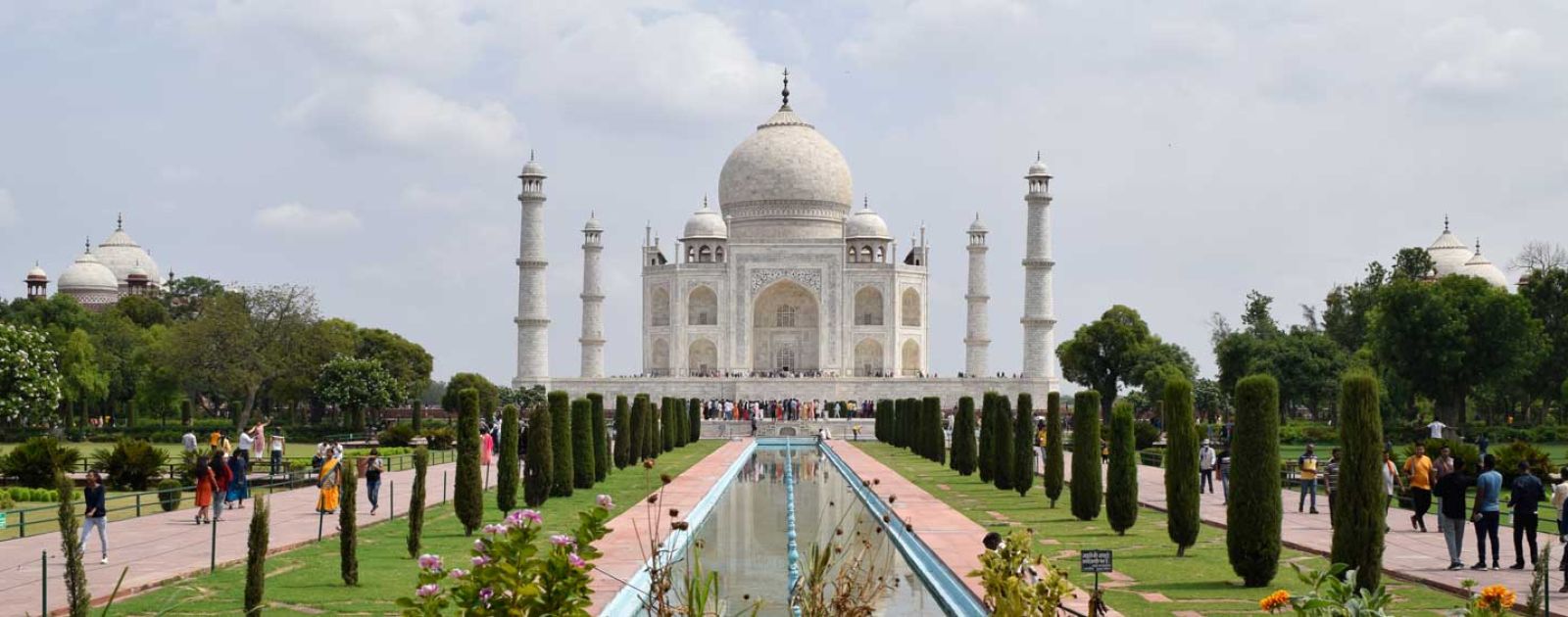
Taj Mahal – History, Architecture & Guide for Visitors
Introduction
The Taj Mahal, a UNESCO World Heritage Site, is one of the most iconic monuments in India. Located in Agra, Uttar Pradesh, on the banks of the Yamuna River, it is often called the “Crown of the Palace.” Built by Mughal Emperor Shah Jahan in memory of his wife Mumtaz Mahal, the Taj Mahal is a symbol of eternal love, Mughal architecture, and Indian heritage. Visiting the Taj Mahal is a must on any Agra tour, Taj Mahal tour from Delhi, or Golden Triangle tour.
History of the Taj Mahal
- Commissioned in 1632 AD by Shah Jahan after the death of Mumtaz Mahal.
- Construction of the main mausoleum completed in 1648 AD, while the surrounding structures like the mosque, guest house, and gateway were finished by 1653 AD.
- Chief architect: Ustad Ahmad Lahori, assisted by artisans from India, Persia, and Central Asia.
- Materials used: White marble from Makrana, jasper from Punjab, jade and crystal from China, and precious stones from across Asia.
- Over 1,000 elephants were used to transport the building materials.
- The Taj Mahal is not just a monument; it’s a story of love, art, and Mughal grandeur.
Architecture of the Taj Mahal
The Taj Mahal is a masterpiece of Mughal architecture, combining Persian, Islamic, and Indian styles. Its symmetry, design, and intricate details make it unique in the world.
Key Architectural Features:
- Main Dome: A majestic white marble dome surrounded by four smaller domes.
- Minarets: Four tall minarets at the corners, enhancing symmetry and structural stability.
- Cenotaphs: Tombs of Mumtaz Mahal and Shah Jahan in the lower crypt.
- Inlay Work: Floral patterns with precious and semi-precious stones on walls and arches.
- Charbagh Garden: A Persian-style garden divided into four parts with pathways, fountains, and reflecting pools.
- Mosque & Jawab: Red sandstone buildings flanking the tomb for balance and religious purposes.
- Main Gateway (Darwaza): Marble entrance that mirrors the tomb’s arches and decorations.
- The white marble, red sandstone, and detailed inlay work create a timeless elegance. Early morning or late afternoon light enhances the monument’s beauty, perfect for photography.
Significance of the Taj Mahal
- Recognized as one of the Seven Wonders of the World.
- Symbolizes eternal love and Mughal history.
- Influenced architecture across India and beyond.
- Attracts millions of domestic and international tourists every year.
Visiting the Taj Mahal
Best Time: October – March
Opening Hours: Sunrise to Sunset (Friday closed )
Tips: Hire a local guide to understand history, architecture, and hidden details. Visit early morning or sunset for the best views and photos.
Taj Mahal Tours & Packages
Taj Mahal Tour from Delhi: One-day or two-day trips with professional guides and drivers.
Golden Triangle Tour: Explore Delhi, Agra, and Jaipur with expert local guides.
A guide helps you skip ticket lines, discover hidden spots, and enjoy historical storytelling, ensuring a memorable visit.
Conclusion
The Taj Mahal is more than just a monument; it is a timeless symbol of love, Mughal artistry, and Indian heritage. Its white marble beauty, intricate inlay work, and perfectly landscaped gardens make it a must-visit destination in Agra. Whether you are a history enthusiast, architecture lover, or a traveler seeking unforgettable experiences, the Taj Mahal offers a journey through time.
To fully appreciate its stories, secrets, and architectural marvels, consider exploring the monument with a professional local guide. Pair your visit with nearby attractions like Agra Fort or Mehtab Bagh for a complete and memorable Agra tour experience.
Visiting the Taj Mahal is not just sightseeing—it’s experiencing history, art, and love at its finest.


