

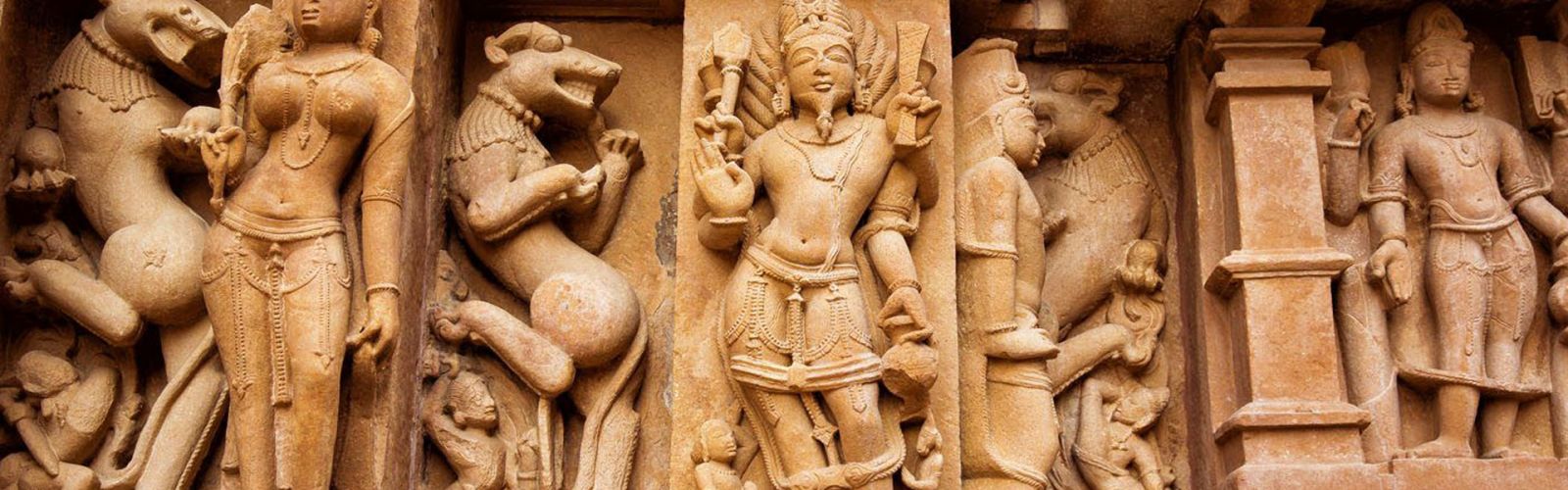
Khajuraho – The Temples of Love and Art
Khajuraho, located in Madhya Pradesh, is one of India’s most remarkable heritage sites, celebrated for its exquisite group of Hindu and Jain temples adorned with intricate sculptures. Recognized as a UNESCO World Heritage Site, Khajuraho is a masterpiece of Indian art, spirituality, and architecture, symbolizing the creative brilliance of the Chandela dynasty.
Historical Background
The Khajuraho temples were built between the 9th and 12th centuries by the rulers of the Chandela dynasty, who were great patrons of art and culture. During their rule, around 85 temples were constructed, though only 20 survive today, standing as magnificent examples of Nagara-style architecture.
The temples were built in dedication to both Hindu and Jain deities, showing the spirit of religious tolerance that prevailed during the Chandela period. Each temple was designed to depict not only divine worship but also human life in its entirety — from spiritual pursuit to worldly pleasures.
Architecture and Sculptures
The architecture of Khajuraho is world-famous for its detailed carvings and sensuous sculptures. These carvings portray scenes from mythology, daily life, musicians, dancers, and the famous erotic figures, which represent the ancient Indian concept of Kama (love) as one of the essential aspects of life, alongside Dharma, Artha, and Moksha.
The temples are divided into three groups:
- Western Group: Includes the most famous temples like Kandariya Mahadeva Temple, dedicated to Lord Shiva, and Lakshmana Temple, known for its grandeur and symmetry.
- Eastern Group: Mostly Jain temples such as Parsvanath and Adinath Temples, showcasing refined artistry.
- Southern Group: Features smaller temples like Dulhadev Temple, dedicated to Lord Shiva.
The temples were built on high platforms with soaring shikharas (spires) that symbolize the spiritual journey from earth to heaven.
Rediscovery and Preservation
After centuries of decline following the fall of the Chandela dynasty, Khajuraho’s temples were slowly forgotten and hidden by dense forests. In the 19th century, the British explorer T.S. Burt rediscovered them, bringing international attention to their unmatched beauty and craftsmanship.
Today, Khajuraho is one of India’s top heritage tourism destinations, attracting travelers, historians, and photographers from across the world.
Cultural Significance
Khajuraho represents the celebration of life, love, and devotion. The temples blend spirituality with human emotion, teaching that earthly pleasures and spiritual pursuits coexist harmoniously.
Every year, the Khajuraho Dance Festival showcases India’s classical dance forms in the backdrop of these ancient temples — a truly magical experience.


